Abstract
Artificial Intelligence (AI) and Augmented Reality (AR) usage in design synthesis is evolving rapidly and fears surrounding these technologies are irrational. They offer significant opportunities for growth and innovation. There is a misconception that AI and AR will displace human designers, rather than serve as tools that augment creativity and collaboration. By drawing on historical parallels, such as the introduction of the power loom during the Industrial Revolution, this paper illustrates how technological advancements traditionally feared for disrupting jobs enhance opportunities. The discussion highlights AI as a “modern machine” that democratizes access to design tools and AR as a catalyst for seamless, immersive collaboration across distances. This is a comprehensive exploration of how emerging technologies can reshape design synthesis for the better.
Introduction
This paper will address three key points: first, why the fear of AI and AR is unfounded, given their potential to create new roles and support designers in achieving higher efficiency and inclusivity; second, how AI functions as a “personal consultant” that democratizes access to design tools and insights; and third, how AR fosters real-time collaboration across distances, enhancing design outcomes through shared virtual workspaces. While adopting these technologies may face limitations, such as high costs for AR, the benefits they offer for inclusivity, creativity, and problem-solving make them essential tools for the future of design synthesis.
Fear for the Future of Design Synthesis is Irrational
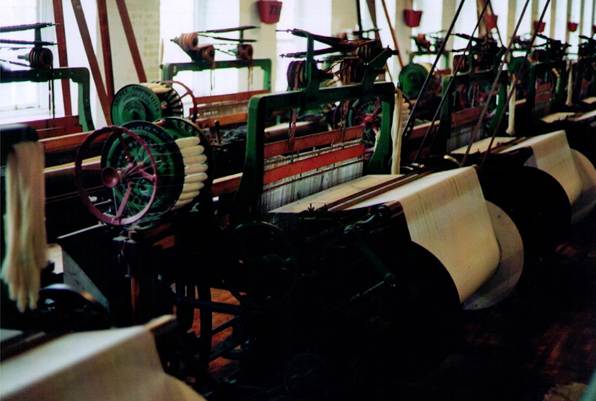
Figure 1 – Power loom. (2024, October 21). In Wikipedia, The Free Encyclopedia. Retrieved from https://en.wikipedia.org/wiki/Power_loom
As AI and AR continue to reshape the field of design synthesis, fears of obsolescence have emerged. Some believe that AI and AR will erode the need for human designers, reducing design work to automated tasks and eliminating jobs in the field. However, these fears echo concerns about many past innovations and are misplaced. Instead, history demonstrates that innovative technologies can enhance fields by opening new job opportunities, boosting efficiency, and democratizing access to powerful tools. Fear of technological advancement in design synthesis is irrational and working with, rather than against, emerging technologies is crucial to thriving in this new era.
The Loom and the Industrial Revolution: A Historical Parallel
The introduction of the power loom during the Industrial Revolution provides a powerful example of how fears surrounding recent technology often prove unfounded. Initially, the loom was met with resistance, as people worried it would replace skilled workers in the textile industry, eliminate jobs, and compromise quality. Some of these disruptions did occur, as traditional weaving roles declined, but the loom brought unprecedented prosperity over time. The power loom transformed the industry, catalyzing economic growth and creating new, diverse job opportunities in manufacturing and distribution. This democratization made high-quality goods accessible to broader segments of society and helped narrow the gap between social classes (Power loom, 2024).
The story of the loom parallels the potential of AI and AR in design synthesis. As the loom empowered the textile industry to flourish, AI and AR can propel design synthesis forward. These technologies do not represent a threat to the field but rather a natural evolution that can redefine how designers work, expanding the scope and reach of their contributions. The World Economic Forum (2023) argues that “The jobs most at risk of automation – with up to four-fifths of the tasks automated – are those that involve routine and repetitive language tasks,” by offloading repetitive or data-intensive tasks. AI’s data processing capabilities and AR’s collaborative potential both serve to support and enhance human creativity, not replace it. Embracing these tools allows designers to elevate their work, addressing new challenges and reaching a broader audience.
Embracing Change to Stay Relevant
As AI and AR handle more tedious tasks, designers must develop new skills to remain relevant. By learning to leverage AI for data analysis or AR for collaborative creativity, designers can position themselves to take on new roles within an increasingly digital, data-driven environment. Just as the power loom did not eliminate work but shifted the nature of tasks within the textile industry, AI and AR are poised to shift design synthesis work. While some traditional roles may diminish, new roles—such as data-driven design strategist or AR collaboration facilitator—will emerge, enabling designers to apply their creativity in different contexts. Those who embrace this change will be better prepared to take on these new roles and contribute meaningfully to the future of design.
Advancing Efficiency, Inclusivity, and Innovation
One of the main benefits of integrating AI and AR in design synthesis is the potential to boost efficiency. AI can handle vast amounts of data and perform analysis at speeds unachievable by humans alone. This capability can help designers test concepts, predict trends, and optimize designs more rapidly than traditional methods allow. By freeing up time that would have been spent on repetitive tasks, designers can focus on high-level, strategic work that requires human insight and creativity. Additionally, AR’s ability to foster real-time, remote collaboration allows designers from diverse backgrounds or non-designers to contribute ideas and insights, enhancing inclusivity in design processes (Singh, 2023).
The potential for innovation through increased inclusivity is significant. When more voices contribute to design synthesis, the result is a wider range of ideas, leading to more innovative solutions. As Mortice (2022) found, AR enhances communication and feedback, allowing designers to share ideas and adjust in real-time. This ease of communication can expand the scope of collaboration, enabling designers to work with a more diverse group of stakeholders and promoting a richer, more inclusive creative process.
Conclusion: Embracing Opportunity, Not Fear
Considering historical patterns and the practical benefits of AI and AR, the fear surrounding these technologies in design synthesis is irrational. Like the power loom before them, AI and AR are tools that can empower designers rather than replace them. As design synthesis moves forward, the choice is clear: resist change and risk obsolescence or embrace these advancements and secure a place in the future of design. By familiarizing themselves with these tools, designers can adapt to the shifting landscape, position themselves for emerging roles, and contribute to a more innovative, inclusive future in design synthesis. Potentially with design adjacent jobs since AI tools allow non-designers or novice designers to engage in design synthesis and creative problem-solving, broadening the pool of perspectives and fostering inclusivity in the field (Paun, 2024).
AI is the Latest “Machine” in the Modern Industrial Revolution

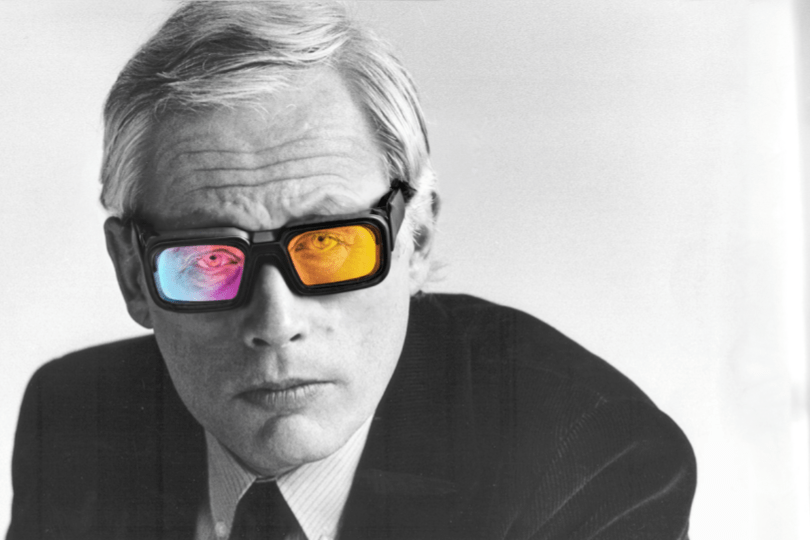
Thomas H. Davenport and Nitin Mittal. (2022, November 14). How generative AI is changing creative work. Harvard Business Review. https://hbr.org/2022/11/how-generative-ai-is-changing-creative-work
Artificial intelligence is emerging as a transformative tool that echoes the revolutionary power of machines from the first Industrial Revolution. Much like steam engines and mechanized looms reshaped labour, AI has the potential to fundamentally redefine the way design synthesis is approached, acting as a “personal consultant.” AI’s role as a knowledge accelerator can open new doors, making design synthesis more accessible and efficient, while enabling designers to reach more innovative conclusions.
AI as a “Personal Consultant” in Design Synthesis
Whether answering questions, analyzing data, or generating design suggestions, AI can provide designers with rapid, accurate information to speed up decision-making processes. Previously, designers had to consult multiple sources, conduct extensive research, and spend hours refining ideas. AI algorithms can now perform much of this work instantaneously, freeing designers to focus on higher-level strategic tasks and creative thinking. For instance, AI tools like DALL-E for image generation and ChatGPT for text synthesis allow designers to quickly brainstorm ideas, identify patterns in consumer behaviour, and simulate multiple scenarios in ways that were previously time-intensive or unfeasible (Kaplan, N/A).
In the past, mechanized tools freed labourers from intensive manual work, allowing them to focus on supervising, managing, and innovating. Similarly, Kaplan (N/A) notes, “The integration of AI – [improves] design thinking with AI, thus accelerating the innovation process. Organizations that adopt AI-driven design thinking strategies can gain a significant edge, as AI offers the ability to analyze vast datasets, predict trends, and generate solutions at a pace and scale beyond human capacity.”
Increasing Accessibility and Democratizing Design
AI’s accessibility has also democratized the design process, making advanced tools available to a broader audience. Much like machines in the first Industrial Revolution, which enabled a wider range of people to participate in manufacturing, AI can lower the entry barriers to design synthesis. With user-friendly interfaces and reduced requirements for technical expertise, AI tools allow non-designers or novice designers to engage in design synthesis and creative problem-solving, broadening the pool of perspectives and fostering inclusivity in the field (Paun, 2024).
For example, AI-powered platforms such as Canva and Adobe Firefly allow individuals with limited design experience to produce polished, professional designs through pre-trained models and automated design suggestions. Less design-oriented individuals can participate in the design, as De Peuter et al. (2023) outline how AI could be used as a design assistant.
Enhancing Speed and Efficiency in Design Synthesis
Designers often need to analyze multiple sources of data, visualize complex information, and iteratively refine their ideas—a process that traditionally requires considerable time and resources can now be accelerated by AI. Machine learning algorithms, for example, can quickly analyze data on consumer preferences, predict market trends, and identify successful design elements based on historical data, which helps designers make more informed choices. Studies have shown that companies implementing AI in design workflows see as much as a 20% increase in efficiency (Thomas H. Davenport and Nitin Mittal, 2022). This means teams can bring products to market more quickly and respond to consumer needs more effectively.
Additionally, AI-driven tools like predictive analytics and generative design allow designers to explore multiple iterations of a concept in a fraction of the time it would take manually. Generative design, for example, enables designers to input specific parameters, after which the AI generates various design options that meet those criteria, allowing designers to evaluate a range of solutions quickly. As the World Economic Forum (2023) says, “Large language models (LLMs) have the most potential to benefit jobs that involve critical thinking and complex problem-solving skills.”
Conclusion: AI as a Catalyst for Innovation in Design
Rather than fearing AI’s role in the field, designers can see it as a tool, specifically a “personal consultant,” offering insights, speeding up processes that once consumed substantial amounts of time and resources, freeing designers to tackle bigger, more complex challenges.
AR will Revitalize Collaboration in the Workforce
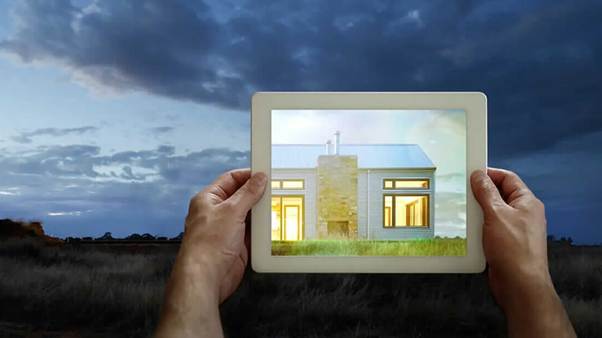
Figure 3 – Mortice, Z. (2022, February 11). AR in architecture unites design and construction teams. Autodesk. Retrieved from https://www.autodesk.com/design-make/articles/what-is-augmented-reality
AR has the potential to become a powerful platform for design collaboration, offering intuitive communication, bridging geographical barriers, and enhancing creativity through real-time visualization.
AR as an Intuitive Communication Platform
One of AR’s most promising features is its ability to facilitate intuitive communication in the design process. By overlaying digital information onto the physical environment, AR allows participants to visualize and manipulate 3D models, annotations, and designs as if they were tangible objects in the room. It is much more effective than traditional communication methods that rely on static images or lengthy descriptions. As Mortice (2022) explains, “For architects and designers, AR offers much of its value in the initial stages of design as a tool to experiment with form and attract client and stakeholder buy-in. It helps non-designers understand how any architectural composition will work: the proportion of spaces, its orientation on a site, the views it affords, the mix of material finishes.”
Imagine a design team working on a new product prototype, using AR, they can all view the same 3D model from different angles, adjusting and receiving instant feedback from teammates. Rather than waiting for each person to review a static mock-up, the team can see real-time changes, accelerating the process and improving the design’s overall quality. Also, according to Newroom.io (2024) “implementing augmented reality in interior design can reduce design time by up to 60%, primarily due to enhanced communication efficiency and fewer revision cycles.
Bridging Geographical Gaps and Expanding Access
Designers and stakeholders no longer need to be in the same physical space to collaborate effectively; instead, AR creates a “shared reality” where team members can interact as if they were in the same room. This feature is valuable for companies with geographically dispersed teams or projects requiring expertise from multiple locations. As Singh (2023) points out, “Users can experience an immersive and interactive reality where the boundaries between the physical and digital worlds are blurred. From gaming and entertainment to Remote Collaboration and education, AR devices are revolutionizing various sectors, offering unprecedented opportunities for innovation and improvement.” This remote, AR-driven collaboration reduces costs and minimizes logistical challenges.
Real-Time Visualization and Enhanced Creativity
AR allows designers and co-workers or clients to experiment with colour palettes, materials, or dimensions on a prototype by adjusting these elements virtually, saving both time and resources (CAD Crowd, 2023). This enhanced flexibility allows designers to test multiple concepts in the same session, making the creative process more fluid and encouraging innovation. Mortice (2022) says, “It helps non-designers understand how any architectural composition will work: the proportion of spaces, its orientation on a site, the views it affords, the mix of material finishes.”
Conclusion: AR as a Catalyst for Collaborative Innovation
Far from something to fear, AR represents a new horizon for design collaboration, one that empowers teams to work together more seamlessly and bring richer ideas to life. By embracing AR’s capabilities, designers can take full advantage of its potential to transform the collaborative process, ushering in an era of design synthesis that is as efficient as it is innovative.
Conclusion
The rapid advancement of AI and AR presents an era of transformative potential for design synthesis, offering new levels of efficiency, inclusivity, and creativity. There are challenges posed by these technologies, though rather than fearing their impact, designers should embrace AI and AR as powerful tools that enhance, rather than replace, human creativity. By reflecting on historical parallels, such as the Industrial Revolution, this deep dive has shown that technological change—while initially disruptive—drives growth and innovation when met with openness and adaptability.
The introduction of the power loom demonstrated that while modern technology may alter traditional roles, it often leads to economic growth and job creation in emerging fields. So, we should not fear the implementation of innovative technologies.
AI is a “modern machine” that functions like a personal consultant, significantly improving the speed and accessibility of design synthesis. AI’s ability to process and analyze data quickly opens new doors for designers, making sophisticated tools available to a wider audience and democratizing the creative process. Overall, while being weary not to create similar-looking products AI should be used to enhance the design synthesis workflow.
AR’s role as a collaborative platform was examined, illustrating how it bridges geographical gaps and fosters real-time experimentation and feedback among designers. Though true, current limitations, such as prohibitive costs and technical requirements, may hinder AR’s widespread adoption, especially among smaller design studios (TechnoLynx, 2024). Further research should assess cost-effective ways to integrate AR into diverse design environments, ensuring broader accessibility so designers can utilize this valuable tool for design synthesis.
In conclusion, AI and AR offer unprecedented possibilities for design synthesis, enhancing both the creative and collaborative aspects of the field. While challenges exist, history and emerging research suggest that these technologies, when embraced, can drive design synthesis toward a future marked by inclusivity, efficiency, and creativity.
Bibliography
CAD Crowd. (2023, July 6). Top 5 benefits of using AR (augmented reality) for product design at companies. Retrieved from https://www.cadcrowd.com/blog/top-5-benefits-of-using-ar-augmented-reality-for-product-design-at-companies/
Thomas H. Davenport and Nitin Mittal. (2022, November 14). How generative AI is changing creative work. Harvard Business Review. https://hbr.org/2022/11/how-generative-ai-is-changing-creative-work
De Peuter et al. (2023, March 3). Toward AI assistants that let designers design. AI Magazine, 44(1), 85–96. https://doi.org/10.1002/aaai.12077
Paun. (2024, June 28). Breaking down the dichotomy between AI and human-centered design. Forbes. Retrieved from https://www.forbes.com/councils/forbesagencycouncil/2024/06/28/breaking-down-the-dichotomy-between-ai-and-human-centered-design/
Kaplan, S. (N/A). AI-powered design thinking: Accelerating innovation and insights. Retrieved from https://www.sorenkaplan.com/improving-design-thinking-with-ai/
Mortice, Z. (2022, February 11). AR in architecture unites design and construction teams. Autodesk. Retrieved from https://www.autodesk.com/design-make/articles/what-is-augmented-reality
Newroom.io. (2024, October 23). 10 ways AR enhances interior design in 2024. Retrieved from https://www.newroom.io/blog/10-ways-ar-enhances-interior-design-in-2024
Power loom. (2024, October 21). In Wikipedia, The Free Encyclopedia. Retrieved from https://en.wikipedia.org/wiki/Power_loom
Singh. (2023, October 3). AR collaboration: The future of remote teamwork. Thehotskills. Retrieved from https://thehotskills.com/augmented-reality-collaboration/
TechnoLynx. (2024, July 8). Augmented reality: Problems and challenges. Retrieved from https://www.technolynx.com/post/augmented-reality-problems-and-challenges
World Economic Forum. (2023, September 18). Generative AI to enhance creativity, automate routine tasks for future jobs. Retrieved from https://www.weforum.org/press/2023/09/generative-ai-to-enhance-creativity-automate-routine-tasks-for-future-jobs/
Fear for the Future of Design Synthesis
Mortice, Z. (2022, February 11). AR in architecture unites design and construction teams. Autodesk. Retrieved from https://www.autodesk.com/design-make/articles/what-is-augmented-reality
Power loom. (2024, October 21). In Wikipedia, The Free Encyclopedia. Retrieved from https://en.wikipedia.org/wiki/Power_loom
Singh. (2023, October 3). AR collaboration: The future of remote teamwork. Thehotskills. Retrieved from https://thehotskills.com/augmented-reality-collaboration/
World Economic Forum. (2023, September 18). Generative AI to enhance creativity, automate routine tasks for future jobs. Retrieved from https://www.weforum.org/press/2023/09/generative-ai-to-enhance-creativity-automate-routine-tasks-for-future-jobs/
AI is the Latest “Machine” in the Modern Industrial Revolution
Thomas H. Davenport and Nitin Mittal. (2022, November 14). How generative AI is changing creative work. Harvard Business Review. https://hbr.org/2022/11/how-generative-ai-is-changing-creative-work
De Peuter et al. (2023, March 3). Toward AI assistants that let designers design. AI Magazine, 44(1), 85–96. https://doi.org/10.1002/aaai.12077
Paun. (2024, June 28). Breaking down the dichotomy between AI and human-centered design. Forbes. Retrieved from https://www.forbes.com/councils/forbesagencycouncil/2024/06/28/breaking-down-the-dichotomy-between-ai-and-human-centered-design/
Kaplan, S. (N/A). AI-powered design thinking: Accelerating innovation and insights. Retrieved from https://www.sorenkaplan.com/improving-design-thinking-with-ai/
World Economic Forum. (2023, September 18). Generative AI to enhance creativity, automate routine tasks for future jobs. Retrieved from https://www.weforum.org/press/2023/09/generative-ai-to-enhance-creativity-automate-routine-tasks-for-future-jobs/
AR will Revitalize Collaboration in the Workforce
CAD Crowd. (2023, July 6). Top 5 benefits of using AR (augmented reality) for product design at companies. Retrieved from https://www.cadcrowd.com/blog/top-5-benefits-of-using-ar-augmented-reality-for-product-design-at-companies/
Mortice, Z. (2022, February 11). AR in architecture unites design and construction teams. Autodesk. Retrieved from https://www.autodesk.com/design-make/articles/what-is-augmented-reality
Newroom.io. (2024, October 23). 10 ways AR enhances interior design in 2024. Retrieved from https://www.newroom.io/blog/10-ways-ar-enhances-interior-design-in-2024
Singh. (2023, October 3). AR collaboration: The future of remote teamwork. Thehotskills. Retrieved from https://thehotskills.com/augmented-reality-collaboration/
TechnoLynx. (2024, July 8). Augmented reality: Problems and challenges. Retrieved from https://www.technolynx.com/post/augmented-reality-problems-and-challenges
Figures
Figure 1 – Power loom. (2024, October 21). In Wikipedia, The Free Encyclopedia. Retrieved from https://en.wikipedia.org/wiki/Power_loom
Figure 2 – Thomas H. Davenport and Nitin Mittal. (2022, November 14). How generative AI is changing creative work. Harvard Business Review. https://hbr.org/2022/11/how-generative-ai-is-changing-creative-work
Figure 3 – Mortice, Z. (2022, February 11). AR in architecture unites design and construction teams. Autodesk. Retrieved from https://www.autodesk.com/design-make/articles/what-is-augmented-reality
